* Saturday still looks partly sunny (44-48 F). for the Conservation MN bike ride in St. Paul, part of St. Paul's Legacy Weekend. We hope to see you at the History Center Saturday morning. Details below.
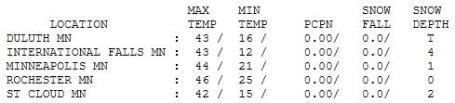
Trace of snow on the ground in the Twin Cities.
48 F. high on Thursday in the metro area.
81 F. high temperature a year ago today, on April 1, 2010.
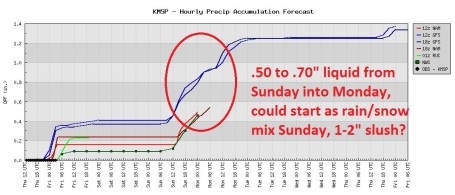
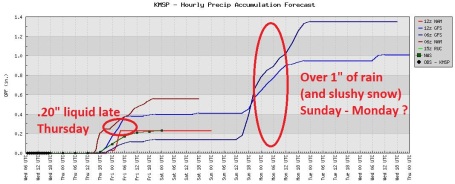
.50 - .60" predicted precipitation Sunday into Monday morning, most of it falling as a cold rain.
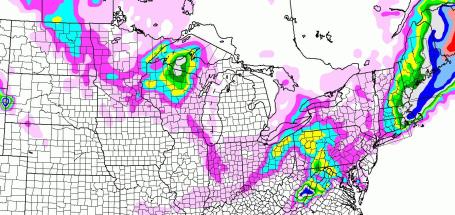
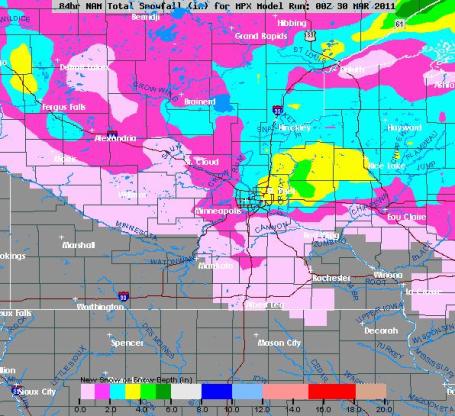
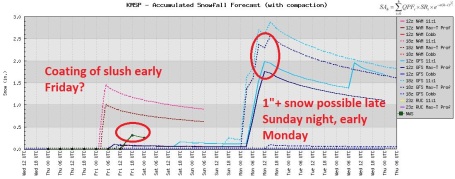
Coating - 2" potential for wet snow in the metro area Sunday night into early Monday.
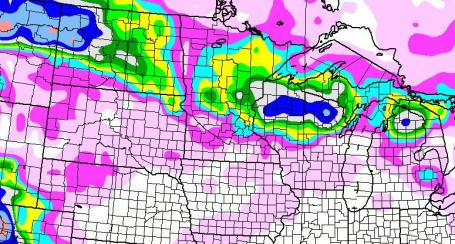
3-6" possible over parts of central/northern Minnesota from Sunday PM hours into Monday morning. Could be plowable.
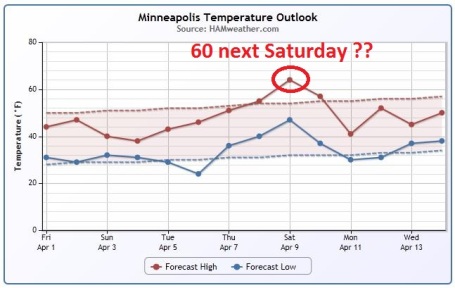
60 F. predicted high a week from tomorrow, on April 9.
63 F. average high by April 30.
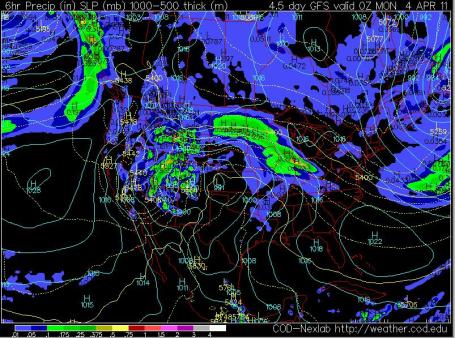
Significant Sunday Storm. The models are all unanimous in bringing a southern storm into Minnesota and the Upper Midwest - the question is what flavor will the precipitation be? Although I still suspect the bulk of precipitation will fall as a cold rain, I could see a period of snow late Sunday and Sunday night, with a potential for an inch or two of slush before flurries taper Monday. As much as 2-5" of heavy, wet snow may fall from St. Cloud into the far northern suburbs of the Twin Cities.
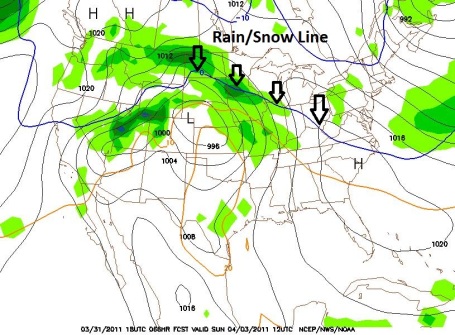
Sunday Slop-Storm. The forecast for Sunday is far from clear-cut (why should it be easy?) The rain-snow line is forecast to hover over southern Minnesota during the morning hours, with a period of rain much of the day. Temperatures aloft will cool during the day as winds shift from southeast to a more northeasterly direction, changing rain over to wet snow later in the day Sunday and Sunday night. Right now it doesn't look "plowable" in the metro area, but I could see an inch or 2 of slushy, wet snow Sunday night into Monday morning. Monday's commute may be slow - but again, whatever does fall will be gone by Tuesday afternoon. The beauty of an April snow.
Sunday Slush. The rain-snow line will be hovering close to the Twin Cities metro area much of Sunday, mostly rain over far southern Minnesota, a mix of rain and wet snow from the Twin Cities westward to Willmar. A cold rain may change over to wet snow by Sunday evening and Sunday night, with a potential for a couple of slushy inches on lawns and fields, maybe enough to plow an hour north of the metro area.
A Reason To Keep On Going. 50s are likely the latter half of next week, with a slight chance of 60 (!) a week from tomorrow. Wouldn't that be nice?
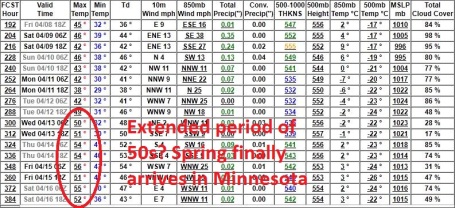
Starting To Look Like Spring. In spite of slush in the (Sunday) outlook, there really are strong hints of a shift in the pattern, into a more spinglike pattern by the middle of the month. The GFS is predicting a streak of 50s after April 12. Most of the snow (statewide) will be gone within 2 weeks.
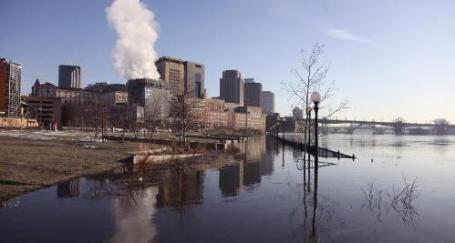
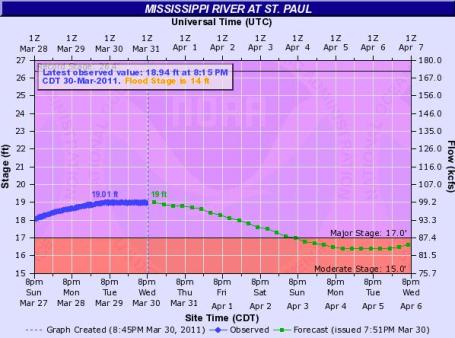
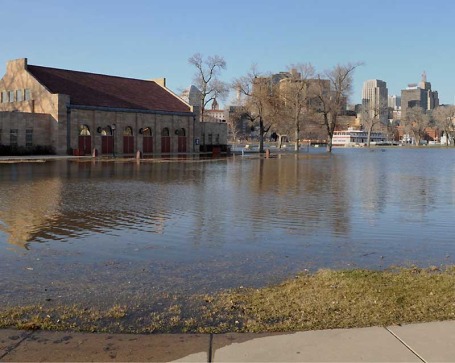
River Crests, But What Happens Next? It's premature to relax and let your guard down if you live along one of Minnesota's streams or rivers. Here's an
update from Bill McAuliffe from the Star Tribune: "
The Mississippi River crested at St. Paul Wednesday and headed back down without substantial problems. But the possibility of rain or snow through the weekend could complicate the region's flooding picture. A storm expected to cross Minnesota Sunday and Monday could bring up to an inch of precipitation. But forecasters were not ready Wednesday to predict whether it would be in the form of rain, which would run quickly into already-high rivers quickly, or snow, which would hold the moisture back. "We're hedging," said Diane Cooper, service hydrologist for the Twin Cities office of the National Weather Service (NWS). "The temperatures are really borderline. A degree or two makes all the difference in how much water that snowpack [remaining on the ground] is going to start releasing."
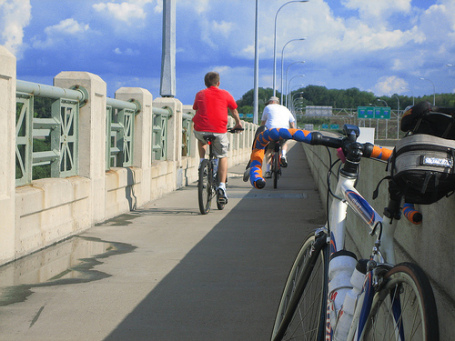
Legacy Weekend. There is plenty to do in St. Paul this weekend, including a bike ride on Saturday - more from Conservation Minnesota Executive Director Paul Austin
here.
There's a ton to do with the family in St. Paul this weekend:
- Biking on Samuel Morgan Trail
- Chatting about weather with Star Tribune meteorologist Paul Douglas
- A sneak preview of the History Center's new "Our Minnesota" exibit
- Learning about lakes with Minnesota author Darby Nelson
- Shows at the Ordway and Chamber Orchestra
- The list literally goes on and on.......
Its all part of St. Paul's Legacy Weekend, jam packed with fun activities that all demonstrate the uses and benifits of funding from the voter approved Clean Water, Land and Legacy Amendment.
Check out the entire calendar and come join the fun.
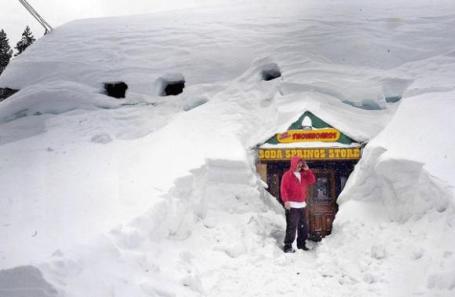
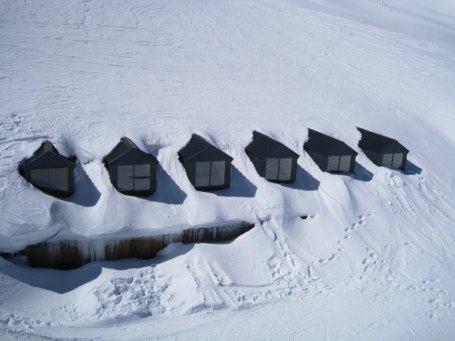
There's A Cabin Down There Somewhere. I have never seen snow like this. Here's an
update from sacbee.com:
"John Hiatt of
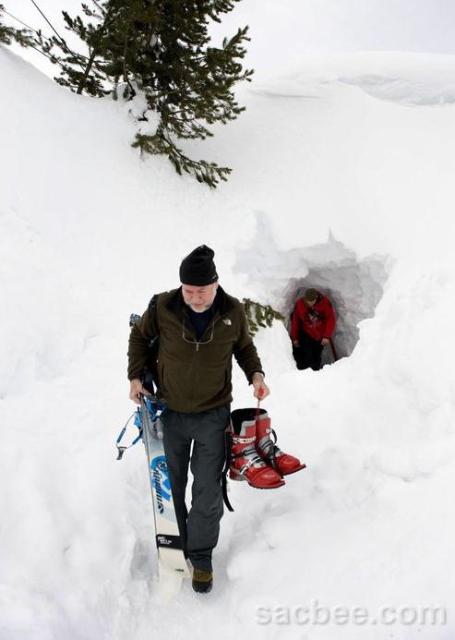
Santa Rosa emerges from his snow-covered cabin with skis and boots in hand at
Serene Lakes. His son
Eric Hiatt follows behind. The Hiatt's spent more than two hours Sunday digging a path to the front door of their cabin.
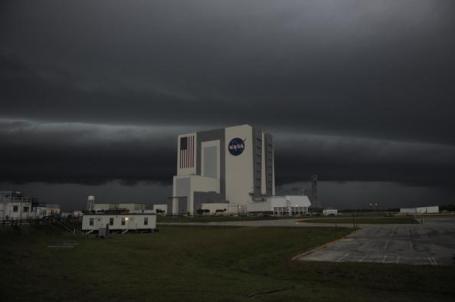
Shelf Cloud. "An ominous thunderstorm cloud hovers over the Vehicle Assembly Building."
Photo courtesy of Twitpic.
Microsoft's Odd Couple. For fellow techno-geeks who might have some interest in historical context, in this case the back and forth between the co-founders of Microsoft, here's a fascinating
excerpt of a book coming out from Paul Allen, courtesy of Vanity Fair: "
My high school in Seattle, Lakeside, seemed conservative on the surface, but it was educationally progressive. We had few rules and lots of opportunities, and all my schoolmates seemed passionate about something. But the school was also cliquish. There were golfers and tennis players, who carried their rackets wherever they went, and in the winter most everyone went skiing. I’d never done any of these things, and my friends were the boys who didn’t fit into the established groups. Then, in the fall of my 10th-grade year, my passion found me. My honors-geometry teacher was Bill Dougall, the head of Lakeside’s science and math departments. A navy pilot in World War II, Mr. Dougall had an advanced degree in aeronautical engineering, and another in French literature from the Sorbonne. In our school’s best tradition, he believed that book study wasn’t enough without real-world experience. He also realized that we’d need to know something about computers when we got to college. A few high schools were beginning to train students on traditional mainframes, but Mr. Dougall wanted something more engaging for us. In 1968 he approached the Lakeside Mothers Club, which agreed to use the proceeds from its annual rummage sale to lease a teleprinter terminal for computer time-sharing, a brand-new business at the time."
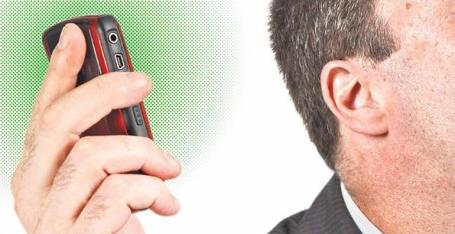
Cell Phone Radiation May Alter Your Brain. Let's Talk. I'm hoping my trusty iPhone won't kill me 15 years down the road. Is there a measurable increase in risk by holding a smart phone next to your brain? Here's an
update from the New York Times: "
In a culture where people cradle their cellphones next to their heads with the same constancy and affection that toddlers hold their security blankets, it was unsettling last month when a study published in The Journal of the American Medical Association indicated that doing so could alter brain activity. The report said it was unclear whether the changes in the brain — an increase in glucose metabolism after using the phone for less than an hour — had any negative health or behavioral effects. But it has many people wondering what they can do to protect themselves short of (gasp) using a landline. “Cellphones are fantastic and have done much to increase productivity,” said Dr. Nora Volkow, the lead investigator of the study and director of the National Institute of Drug Abuse at the National Institutes of Health. “I’d never tell people to stop using them entirely.” Yet, in light of her findings, she advises users to keep cellphones at a distance by putting them on speaker mode or using a wired headset whenever possible. The next best option is a wireless Bluetooth headset or earpiece, which emit radiation at far lower levels. If a headset isn’t feasible, holding your phone just slightly away from your ear can make a big difference; the intensity of radiation diminishes sharply with distance. “Every millimeter counts,” said Louis Slesin, editor of Microwave News, an online newsletter covering health and safety issues related to exposure to electromagnetic radiation."
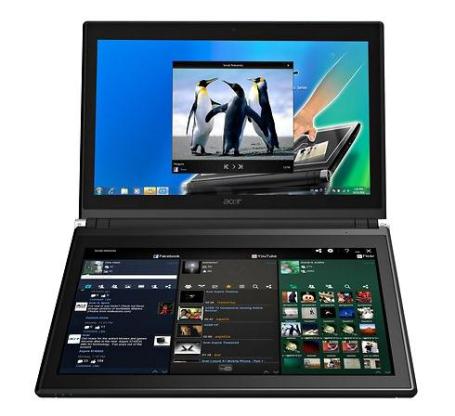
Acer's Iconia Is The Craziest Laptop Of All Time. This is a 10 on the cool factor, but not having a physical keyboard might take some getting used to. If you're bored with your current laptop, consider this option, as described in a recent
article in the New York Times: "
Sometimes engineers get excited about things without stopping to ask the question: Why? Why is this better? Why would anyone want this? Such questions, it would appear, were not asked in the labs of Acer. Its latest offering, the Iconia, is one of the most bizarre products to ever make it to production. The Iconia, when closed, looks like a laptop. When opened, however, all is revealed: the Iconia is actually two 14-inch touchscreens joined at a hinge. This is, frankly, insane. Instead of a physical keyboard one can actually type on, the $1,200 Iconia (available for pre-order now) has a virtual one that is temperamental and twitchy. Supporting two 14-inch touchscreens, along with all the other hardware expected of a Windows 7 computer, means the Iconia weighs 6.2 pounds — making it too heavy to really serve as a laptop."

Careful With Those Facebook/Twitter Posts. This is a cautionary tale - you may want to think twice about mentioning when you're away from your house - especially if you have a lot of (questionable) FB friends. Here's a harrowing
tale from ABC News: "
You're getting ready for a vacation, or for a night out with friends. As part of your routine, you post an update on Facebook or send a tweet. Keri McMullen didn't think anything of doing the same thing, updating her Facebook status with her plans to attend a concert. When she got back home, $10,000 worth of her possessions were gone. "I posted that on my Facebook page, who the band was, where we were going. The band started at 8," she said. The burglary was caught on security video that the woman had running in her home. One of the suspects was one of McMullen's 500 Facebook friends, a man she hadn't seen in 20 years. Police believe her status update tipped off the burglars."
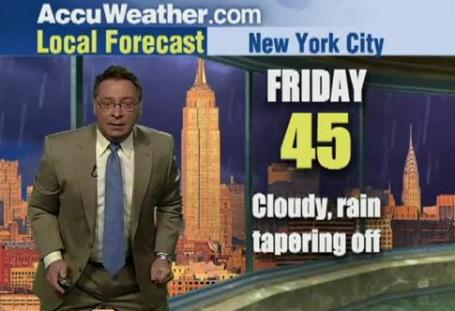
Please Don't Adjust The Volume. This may be the most...uh...well...um..."fascinating" on-air weather forecast I've ever seen on
YouTube. We need to switch Jim to decaf. Rated R, for ridiculous!
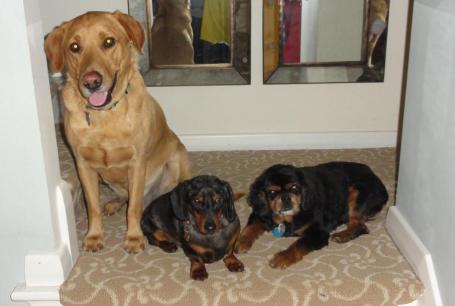
Dog Days Of April. We are dog-sitting for a friend (who is in Florida). Smart move and good timing on his part. From left to right: Copper, Bentley and Max (or 15 year old spaniel). Yep, never a dull moment. Can dogs suffer from cabin fever? Probably - Saturday looks like the best day to take your best canine buddies for a walk.
Thursday Numbers. Yes, 48 felt pretty good out there yesterday afternoon. Redwood Falls picked up .15" liquid, a mix of rain and snow. Snow on the ground ranges from a trace in the Twin Cities to 1" in St. Cloud to 3" up at International Falls.
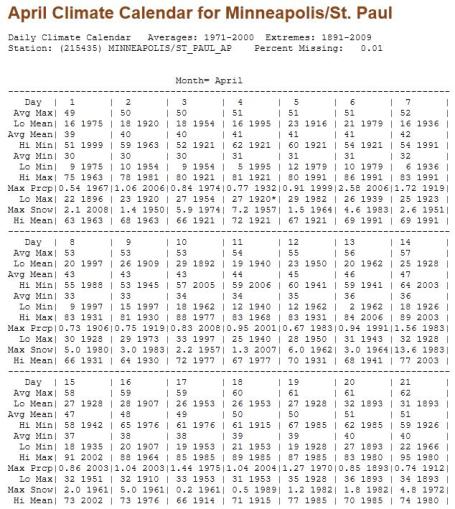
Turning A Big Corner. Average highs in April range from 49 on April 1 to 63 by the 30th. Average snowfall for April: 3.1". But any snow that does fall in April is usually gone within 12-24 hours. You just can't keep snow on the ground (for long) in April. Click
here for the April Calendar, courtesy of the Minnesota State Climate Office.
Paul's Conservation MN Outlook for the Twin Cities and all of Minnesota:
FRIDAY: Early slushy mix? Clouds linger, damp. Winds: W 10-15. High: 44
FRIDAY NIGHT: Patchy clouds, chilly. Low: 32
SATURDAY: Brighter, drier, nicer day of the weekend. Partly sunny skies. Winds: NW 15. High: 49
SATURDAY NIGHT: Cloudy with rain developing late. Low: 34
SUNDAY: A cold rain is likely, possibly mixing with wet snow late in the day. High: 40
SUNDAY NIGHT: A period of wet snow - an inch or two of slush possible in the metro. Low: 33
MONDAY: Cold rain tapers. 1-2" slushy snow north? Low: 33. High: 42
TUESDAY: More clouds than sun, drier. Low: 29. High: 45
WEDNESDAY: Partly sunny, milder breeze. Low: 33. High: 52
THURSDAY: More clouds, PM shower? Finally feels like spring. Low: 40. High: 53
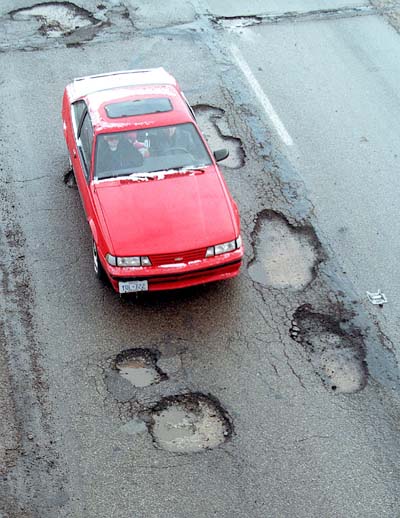
Proliferating Potholes
A friend of mine said it best. "For much of the last 5 months the air outside my window has been trying to murder me!" Another .3" of snow and this becomes the 4th snowiest winter on record in the Twin Cities, which has the dubious distinction of being "the coldest major metropolitan area in the USA." No wonder we spend so much time daydreaming about summer.
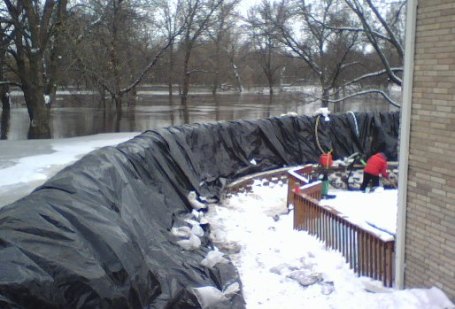
The transition from winter to summer can be painful: slushy snow, a nagging flood risk, EF-3 tornadoes and crater-size potholes, as temperatures flip-flop either side of 32F. La Nina is putting the brakes on spring, but our recent cold spell slowed the rate of snow melt, preventing catastrophic flooding.
The combination of rain and a string of 50s the latter half of next week will start to melt snow again in the coming weeks. A moisture-laden southern storm may drop .5 to .75" rain on Minnesota Sunday, possibly ending as an inch or two of slushy snow Sunday night and Monday morning. Another significant storm (a cold rain?) is brewing for April 10-11; up to 1" of additional moisture. Some level of flood risk will be with us into May.
Finally, what a difference a year makes. April 1, 2010 the mercury soared to 81 in the Twin Cities! And that's no April Fools joke.
Can We Do Without The Mideast? The USA spends roughly $4 billion/week to import oil from various countries around the world. Here's a recent
article from the New York Times: "
Imagine a foreign policy version of the movie “Groundhog Day,” with Bill Murray playing the president of the United States. The alarm clock rings. Political mayhem is again shaking the Middle East, crude oil and gasoline prices are climbing, and an economic recovery is under threat. President Nixon woke up to the same alarm during the 1973-74 Arab oil embargo and declared Project Independence to end the country’s dependency on imported oil. President Carter, during the Iranian revolution, called an effort to reduce dependency on foreign oil “the moral equivalent of war.” President George W. Bush called oil an addiction. On Wednesday, in a nationally televised address, President Obama said, “We cannot keep going from shock when gas prices go up to trance when gas prices go back down. We can’t rush to propose action when prices are high, then push the snooze button when they go down again.” So, with Libyan and other North African and Middle Eastern oil fields jeopardized by political upheaval and Japan’s nuclear power disaster turning the energy world on its head, the alarm is ringing again. As gasoline prices rise and even the stability of Saudi Arabia is suddenly in question, energy independence is taking on new urgency."
Obama Lays Out Plan To Cut Reliance On Fuel Imports. Following up on the article above, President Obama has some ideas about cutting our dependence on foreign crude. Here are the
details from the New York Times: "
President Obama called on Wednesday for a one-third reduction in oil imports over the next decade, and said the effort had to begin immediately. In a speech at Georgetown University , the president said that the United States cannot go on consuming one- quarter of the world’s oil production while posessing only two percent of global reserves. He said that the country had to begin a long-term plan to reduce its reliance on imported oil, and that the decades-long political bickering that has stalled progress toward that goal had to end. With oil supplies from the Middle East now pinched by political upheaval with calls growing in Congress for expanded domestic oil and gas production, the president referred in his speech a similar runup in energy prices in 2008. “Now here’s the thing — we’ve been down this road before,” Mr. Obama said. “Remember, it was just three years ago that gas prices topped $4 a gallon. I remember because I was in the middle of a presidential campaign.” He continued: “Because it was also the height of political season, so you had a lot of slogans and gimmicks and outraged politicians, they were waving their three-point-plans for two-dollar-a-gallon gas. You remember that: ‘Drill, baby, drill’ and all of that. And none of it would really do anything to solve the problem.”
Number Of Dead Dolphins And Whales In Gulf May Be 50 Times Higher. More possible
impacts from the B.P. spill in the Gulf of Mexico: "
The baby dolphin lay on its side, one flipper pointed toward cloudy skies, rocking back and forth with the waves near Innarity Point, FL “I looked and saw a baby porpoise, a terrible sight to see,” local resident Chris McCune told WKRG-TV News out of nearby Mobile, AL. This young dolphin was one of the most recent of at least 138 dolphins that have died in the Gulf this year, nearly half of them premature or newborn calves. But that’s just the tip of the iceberg, scientists say. Many more dolphins are dying in the Gulf than are officially counted. New research released today shows that the average number for most species may be 50 times higher than what’s reported now, a conservative figure according to the authors."
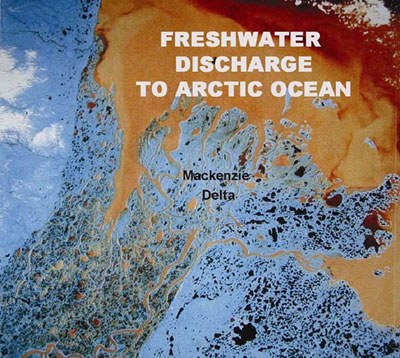
Global Warming: Fresh Water Content Of Arctic Ocean's Upper Layer Up 20 Per Cent. All Headlines News has an
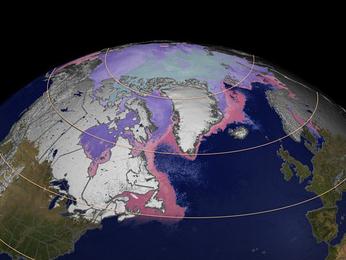
article on what's happening in the Arctic - melting on ice (and glaciers over the northern latitudes) has increased the amount of fresh water (vs. salty ocean water), with possible implications for global ocean circulations: "The fresh water content of the Arctic Ocean’s upper layer is up by 20 percent since the 1990s, according to scientists from the Alfred Wegener Institute in Germany. Scientists explained the rise in fresh water content to the melting of glaciers, which could change the world’s ocean currents and yield potentially disastrous results. The institute – which earlier this month warned that the unusually low temperatures in the Arctic ozone layer have caused massive ozone depletion – said the new fresh water would likely flow out into the North Atlantic and affect global ocean circulation by disrupting the flow of the Gulf Stream. The result would be cooling off in Greenland, Iceland, Norway and parts of Europe, which are warmed by the powerful ocean current. The fresh water on top of the Arctic Ocean serves like a blanket by controlling the amount of heat that escapes from the deeper salty and warm ocean layers and cutting off their heat flow to the ice and atmosphere.

An
article from the Utne Reader: "
In the past, seemingly intractable debates over environmental issues have sometimes been resolved with the aid of long-term historical perspectives. When acid rain dominated the environmental media during the 1980s, for example, sediment core records of recent, progressive acidification in lakes from the northeastern United States helped to break rhetorical logjams between activists who correctly insisted that industrial pollution was the cause and polluters who claimed that the lakes had always been naturally acidic. When global warming later gained wide public attention, ice cores and other such geo-historical records showed that greenhouse gases and climates are indeed closely linked, and that we're fast approaching conditions that are well beyond the normal range of variability. Although it's a rather eclectic discipline that straddles the fields of geology and biology, my chosen profession of paleoecology is well known among scientists for its ability to harness truly long-term thinking in order to place current environmental issues into their most meaningful contexts, showing us where we've been, how we got here, and where we're likely to be headed next. Today, scientists with such long-term perspectives are once again nudging us beyond currently entrenched arguments over human-driven climate change, but their gaze is aimed forward in time, as well as backward. A new generation of climate models and the visionaries who wield them are showing that our carbon legacy will last far longer than most of us yet realize, long enough to interfere with future ice ages. David Archer, an oceanographer and climate modeler at the University of Chicago, sometimes puts it thus; "global warming is essentially forever."
Berkeley Scientists' Climate Data Review Puts Them At Center Of National Debate. A
story from the L.A. Times: "
An effort by a handful of UC Berkeley scientists to reexamine temperature data underlying global warming research has landed in the center of a national political debate over government regulation. The Berkeley Earth Surface Temperature study is led by physicist Richard Muller, a longtime critic of the scientific consensus on climate change, who plans to testify on the effort Thursday before the House Science Committee in the latest of several congressional inquiries on climate science since the GOP majority was seated. The Berkeley project's biggest private backer, with $150,000, is the Charles G. Koch Charitable Foundation. Oil billionaires Charles and David Koch are the nation's most prominent funders of efforts to prevent curbs on fossil-fuel burning, the biggest contributor to planet-warming greenhouse gases. Temperature data from tens of thousands of weather stations across the globe, many of which have incomplete records, are "very contentious," Muller said in an interview. "The skeptics are raising legitimate concerns." Leading climate scientists, however, say the three most in-depth temperature studies agree on the overall severity and pace of global warming."
Presenting The Case For Climate Change. An interesting
post from yourversion.com that delves into people's "belief systems", how they process and internalize information, and how climate change can seem threatening to some: "
The biggest problem for some, about that title, is that they refuse to believe the facts shown them. The idea that someone can be presented with certain facts, verified by more than one capable source, and be considered an intelligent being, yet reject those facts out out of hand, is difficult to reconcile for those presenting the facts.
But the story continues to present the fact that when confronted with things they don’t believe in, non-believers tend to be more amenable to change when the facts are presented in a manner that they can cope with. The problem breaks down to belief systems. There are those that believe in movement for the common good, and those who believe in individual movements being most important. Though the article doesn’t specifically point this out, this roughly corresponds to the ideals of the two party system we have in place here in this nation.
Kahan grades people on two scales of cultural belief: individualists versus communitarians, based on the different importance people attach to the public good when balanced against individual rights; and hierarchists versus egalitarians, based on their views on the stratification of society. Republicans are more likely to be hierarchical-individualist, while Democrats are more often egalitarian-communitarian.
People’s views on contentious scientific issues tend to reflect their position on these scales. For example, egalitarian-communitarians tend to accept the evidence that climate change is a threat, while hierarchical-individualists reject it."
Denial Of Climate Changes Is Dangerous And Irresponsible. A
story from the Miami Herald: "
My daughter, age 5, is a member. Chances are, so is a youngster you know. In fact, every child on Earth born after June 23, 1988, belongs to what I call Generation Hot. These 2 billion young people will spend the rest of their lives coping with the hottest, most volatile climate that civilization has ever known. Recently, I went to Capitol Hill with members of Generation Hot (and the Sierra Club, our country's largest grass-roots environmental organization) to confront the politicians whose denials and delay have done so much to land Generation Hot in this predicament. We wanted to know why my daughter and the other 2 billion members of Generation Hot have to suffer because Republicans in Congress refuse to accept what virtually every major scientific organization in the world, including our own National Academy of Sciences, has said: Man-made climate change is happening now and extremely dangerous. Sen. James Inhofe, the Oklahoma Republican who has famously called climate change "the greatest hoax ever perpetrated on the American people," told our group that "the science is mixed" and his scientists know better than ours. Frank Maisano, a public-relations consultant for big energy companies, told us that "the science doesn't matter"; what matters is what's politically feasible. "The science does matter," Caroline Selle, a member of our group who works for the Energy Action Coalition, responded in a blog the following day. Selle added: "We face a climate catastrophe that will define our generation and the future of our country, and the solutions to this crisis will create jobs and improve public health. So why aren't we acting? Unfortunately, the answer is simple: Capitol Hill is swarming with 'climate cranks' - politicians willing to trade our future for their own political gain."
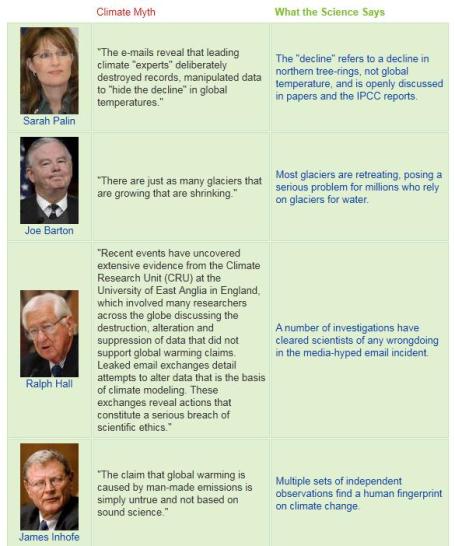
Debunking Climate Myths From Politicians. A
post from Skeptical Science: "
Skeptical Science readers know that the main purpose of our site is to debunk climate-related myths. To achieve this purpose, we have created the Arguments Database, and examined what the scientific literature says about each argument. We have subsequently used this database to respond when we've encountered these myths being repeated and propagated, for example by Christopher Monckton, PreventingDisease.com, and Reconsidering Climate Change. At times we have also made use of the database to debunk myths and flawed arguments made by "skeptic" climate scientists, like Roy Spencer and Richard Lindzen. Recently we addressed a number of myths and misleading statements made by Dr. John Christy in his testimony to U.S. Congress. In watching the associated Congressional hearing, we were disappointed to see many American politicians repeating the same myths which our database has debunked. It appears that these myths have become very pervasive in American politics, and are being used to justify some very anti-science legislation. As a consequence, we at Skeptical Science have decided that it would be a worthwhile endeavor to apply our Arguments Database to certain politicians who frequently perpetrate the myths we have debunked. We have created a Climate Myths from Politicians Database which pairs quotes from politicians with the corresponding rebuttal in the Arguments Database, and the one-line summary of each rebuttal."